Translated with AI from the Russian original.

Uzbekistan and Germany have completed a scientific and practical project to improve the energy efficiency of housing construction, which could change the approach to development in the country. The initiative was implemented with the support of the German IKI program against the background of active urbanization, when issues of energy conservation and environmental friendliness come to the fore in state policy.

As part of the project, scientists from the Eberswalde University for Sustainable Development, the Berlin Technical University, and the Tashkent Institute of Irrigation and Agricultural Mechanization Engineers developed the concept of "low-emission construction." It was embodied in a demonstration residential building on the territory of TIIIMSH. The building is made using wooden frame technology using straw and clay plaster - affordable and environmentally friendly materials of local production, which reduced the carbon footprint compared to traditional concrete and brick.

According to German experts, the house has confirmed its technical reliability and economic feasibility. High thermal insulation reduces the cost of heating and cooling, and architectural solutions maximize the use of natural light and solar heat. The project has also become an educational platform: video lectures in Uzbek, Russian and English form an open knowledge base, and the house itself is used to train students and architects. Experts believe that the initiative lays the foundation for Uzbekistan's transition to a "green" economy and may be in demand in other countries in the region.

Now on the front page

Eco-friendly building materials being developed in Uzbekistan

Eco-friendly building materials being developed in Uzbekistan

Priority areas include the creation of building materials with low energy and resource consumption

Uzbekistan and Cambridge discussed teacher training

Uzbekistan and Cambridge discussed teacher training

Representatives of UNICEF also took part in the negotiations, and the parties discussed the introduction of modern educational methodologies

Using AI to create smart cities in Uzbekistan proposed at COP31

Using AI to create smart cities in Uzbekistan proposed at COP31

Digital twins and IoT sensors will help reduce energy consumption, emissions, and water losses

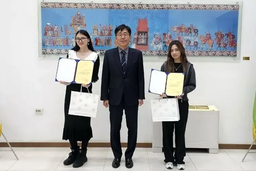
South Korean Embassy awards winners of video competition on AI and climate in Uzbekistan

South Korean Embassy awards winners of video competition on AI and climate in Uzbekistan

Young residents of the country aged 16 to 35 participated in the competition, with the main prizes being Galaxy Tab tablets

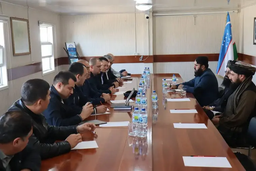
Uzbekistan and Afghanistan will increase rail freight transportation

Uzbekistan and Afghanistan will increase rail freight transportation

The parties agreed to develop infrastructure, expand the Hairatan – Mazar-i-Sharif route, and train Afghan specialists

2.1 million attempts to visit phishing websites blocked in Uzbekistan

2.1 million attempts to visit phishing websites blocked in Uzbekistan

The number of attempts to access fraudulent resources was more than three times higher than at the beginning of 2025

Electricity generation in Uzbekistan increased by 11.6% over the year

Electricity generation in Uzbekistan increased by 11.6% over the year

Thermal and hydroelectric power plants increased energy production.

In Uzbekistan, every scientist will be assigned a lifelong digital identifier

In Uzbekistan, every scientist will be assigned a lifelong digital identifier

Science ID will unite data on researchers, scientific organizations, and the results of their work

Hacker group Rezet attacked companies in Uzbekistan and other CIS countries

Hacker group Rezet attacked companies in Uzbekistan and other CIS countries

Cyber spies use AI to automate phishing mailouts. In October, one of the campaigns reached more than 4,800 recipients.

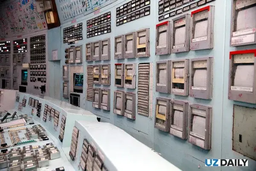
Uzbekistan studied the construction of the Turkish Akkuyu NPP and agreed on localizing equipment production

Uzbekistan studied the construction of the Turkish Akkuyu NPP and agreed on localizing equipment production

Tashkent expects to attract Turkish companies to establish manufacturing facilities for its own nuclear industry.

Uzbekistan offered Canada joint AI projects and training for 5 million people

Uzbekistan offered Canada joint AI projects and training for 5 million people

The parties also discussed attracting Canadian IT companies, venture capital funds, and startup accelerators.

Uzbekistan tightens e-commerce rules: changes to take effect on December 12

Uzbekistan tightens e-commerce rules: changes to take effect on December 12

New requirements will affect foreign marketplaces, sales taxation, and the operations of trading platform operators.