Translated with AI from the Russian original.

By the end of September, the dynamics of the global metals market are increasingly dependent on the dollar exchange rate, bond yields, and expectations regarding the Fed's policy. Rising yields in the US and Europe and a strengthening US currency limit the attractiveness of precious metals. Gold is trading around $4170 per ounce after falling to a more than seven-week low, while silver holds slightly above $61.

Opposing factors are simultaneously at play in the gold market. Geopolitical and debt risks support interest in safe-haven assets, but rising oil prices intensify inflation concerns and expectations of tight monetary policy. Buyers are active in the $4000–4150 per ounce range, but rising yields again limit the recovery of quotes. Silver, meanwhile, remains more volatile due to a combination of investment and industrial demand. Platinum is priced around $1700, palladium — $1210–1220 per ounce.

In the industrial segment, copper attracts the most attention. Its price holds around $6.6 per pound, not far from the September high of approximately $6.85. Over the year, the metal has risen by more than 35%. The market is supported by demand from energy, power grids, data centers, and AI infrastructure, as well as changes in trade flows. Anticipation of American tariffs stimulates copper supplies to the US, while China simultaneously increases its reserves.

Zinc remains around $3860 per ton after a recent rise above $4000, and aluminum trades at approximately $3250. For zinc, support comes from reduced production in China, maintenance of certain facilities, and low exchange inventories. In the case of aluminum, some concerns regarding supplies from the Persian Gulf have eased, but limited warehouse stocks prevent quotes from undergoing a deep correction. As a result, precious metals are currently reacting primarily to financial conditions, while industrial raw materials are reacting to physical availability and structural demand.

Now on the front page

Eco-friendly building materials being developed in Uzbekistan

Eco-friendly building materials being developed in Uzbekistan

Priority areas include the creation of building materials with low energy and resource consumption

Uzbekistan and Cambridge discussed teacher training

Uzbekistan and Cambridge discussed teacher training

Representatives of UNICEF also took part in the negotiations, and the parties discussed the introduction of modern educational methodologies

Using AI to create smart cities in Uzbekistan proposed at COP31

Using AI to create smart cities in Uzbekistan proposed at COP31

Digital twins and IoT sensors will help reduce energy consumption, emissions, and water losses

South Korean Embassy awards winners of video competition on AI and climate in Uzbekistan

South Korean Embassy awards winners of video competition on AI and climate in Uzbekistan

Young residents of the country aged 16 to 35 participated in the competition, with the main prizes being Galaxy Tab tablets

Uzbekistan and Afghanistan will increase rail freight transportation

Uzbekistan and Afghanistan will increase rail freight transportation

The parties agreed to develop infrastructure, expand the Hairatan – Mazar-i-Sharif route, and train Afghan specialists

2.1 million attempts to visit phishing websites blocked in Uzbekistan

2.1 million attempts to visit phishing websites blocked in Uzbekistan

The number of attempts to access fraudulent resources was more than three times higher than at the beginning of 2025

Electricity generation in Uzbekistan increased by 11.6% over the year

Electricity generation in Uzbekistan increased by 11.6% over the year

Thermal and hydroelectric power plants increased energy production.

In Uzbekistan, every scientist will be assigned a lifelong digital identifier

In Uzbekistan, every scientist will be assigned a lifelong digital identifier

Science ID will unite data on researchers, scientific organizations, and the results of their work

Hacker group Rezet attacked companies in Uzbekistan and other CIS countries

Hacker group Rezet attacked companies in Uzbekistan and other CIS countries

Cyber spies use AI to automate phishing mailouts. In October, one of the campaigns reached more than 4,800 recipients.

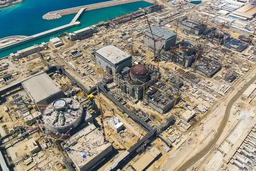
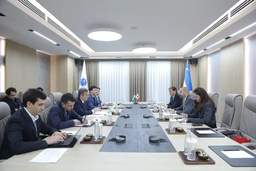
Uzbekistan studied the construction of the Turkish Akkuyu NPP and agreed on localizing equipment production

Uzbekistan studied the construction of the Turkish Akkuyu NPP and agreed on localizing equipment production

Tashkent expects to attract Turkish companies to establish manufacturing facilities for its own nuclear industry.

Uzbekistan offered Canada joint AI projects and training for 5 million people

Uzbekistan offered Canada joint AI projects and training for 5 million people

The parties also discussed attracting Canadian IT companies, venture capital funds, and startup accelerators.

Uzbekistan tightens e-commerce rules: changes to take effect on December 12

Uzbekistan tightens e-commerce rules: changes to take effect on December 12

New requirements will affect foreign marketplaces, sales taxation, and the operations of trading platform operators.