Translated with AI from the Russian original.


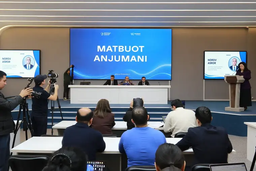
The use of artificial intelligence in education is developing rapidly, but the implementation of technologies remains extremely unsystematic. This was announced at DataFest Tbilisi by Alexey Sruraly, founder of the Estonian company SocialLab, which works in the field of innovation and education with AI. The conference brought together more than 1,000 experts from media, business and technology to discuss current trends and challenges.

According to 2024 data, 87% of schools use AI tools, but only 12% have comprehensive strategies. The remaining 75% act in a fragmented and reactive manner, without clear goals and understanding of the educational effect of technologies. The main problem is that most AI solutions were originally created to improve efficiency, not for educational purposes, and are poorly integrated into programs and assessment systems.

An additional tension is created by the gap between the tasks of teachers and the priorities of technology companies. Manufacturers focus on scalability and commercial performance, while schools need tools that support learning, the development of thinking and equal access for all students.

Experts believe that the solution is a structured approach based on three principles: focus on the curriculum, priority of equality and transparency of AI use. Step-by-step implementation - from pilot projects to scaling - will allow the use of technology as an auxiliary tool, while maintaining control by teachers.

Examples of successful practices were shown by the TUMO Center for Creative Technologies. Its program for teenagers is based on self-study, project work and mentoring without exams and grades. Progress is recorded through a portfolio of real projects, which reduces educational inequality and prepares for the professions of the future.

Experts warn that AI can exacerbate social and economic inequality if implemented without taking context into account. "AI will not replace humanity, but it can leave those who do not know how to work with it or critically evaluate it without work," said Ivana Bartoletti from Wipro.

The conclusion of the conference is a transition to inclusive and sustainable AI management based on values, transparency and cooperation between the state, business, media and society. Pilot projects, testing and documenting implementation stages will help reduce risks and understand which solutions really enhance education.


Now on the front page

Eco-friendly building materials being developed in Uzbekistan

Eco-friendly building materials being developed in Uzbekistan

Priority areas include the creation of building materials with low energy and resource consumption

Uzbekistan and Cambridge discussed teacher training

Uzbekistan and Cambridge discussed teacher training

Representatives of UNICEF also took part in the negotiations, and the parties discussed the introduction of modern educational methodologies

Using AI to create smart cities in Uzbekistan proposed at COP31

Using AI to create smart cities in Uzbekistan proposed at COP31

Digital twins and IoT sensors will help reduce energy consumption, emissions, and water losses

South Korean Embassy awards winners of video competition on AI and climate in Uzbekistan

South Korean Embassy awards winners of video competition on AI and climate in Uzbekistan

Young residents of the country aged 16 to 35 participated in the competition, with the main prizes being Galaxy Tab tablets

Uzbekistan and Afghanistan will increase rail freight transportation

Uzbekistan and Afghanistan will increase rail freight transportation

The parties agreed to develop infrastructure, expand the Hairatan – Mazar-i-Sharif route, and train Afghan specialists

2.1 million attempts to visit phishing websites blocked in Uzbekistan

2.1 million attempts to visit phishing websites blocked in Uzbekistan

The number of attempts to access fraudulent resources was more than three times higher than at the beginning of 2025

Electricity generation in Uzbekistan increased by 11.6% over the year

Electricity generation in Uzbekistan increased by 11.6% over the year

Thermal and hydroelectric power plants increased energy production.

In Uzbekistan, every scientist will be assigned a lifelong digital identifier

In Uzbekistan, every scientist will be assigned a lifelong digital identifier

Science ID will unite data on researchers, scientific organizations, and the results of their work

Hacker group Rezet attacked companies in Uzbekistan and other CIS countries

Hacker group Rezet attacked companies in Uzbekistan and other CIS countries

Cyber spies use AI to automate phishing mailouts. In October, one of the campaigns reached more than 4,800 recipients.

Uzbekistan studied the construction of the Turkish Akkuyu NPP and agreed on localizing equipment production

Uzbekistan studied the construction of the Turkish Akkuyu NPP and agreed on localizing equipment production

Tashkent expects to attract Turkish companies to establish manufacturing facilities for its own nuclear industry.

Uzbekistan offered Canada joint AI projects and training for 5 million people

Uzbekistan offered Canada joint AI projects and training for 5 million people

The parties also discussed attracting Canadian IT companies, venture capital funds, and startup accelerators.

Uzbekistan tightens e-commerce rules: changes to take effect on December 12

Uzbekistan tightens e-commerce rules: changes to take effect on December 12

New requirements will affect foreign marketplaces, sales taxation, and the operations of trading platform operators.